

who bestowed the divine power
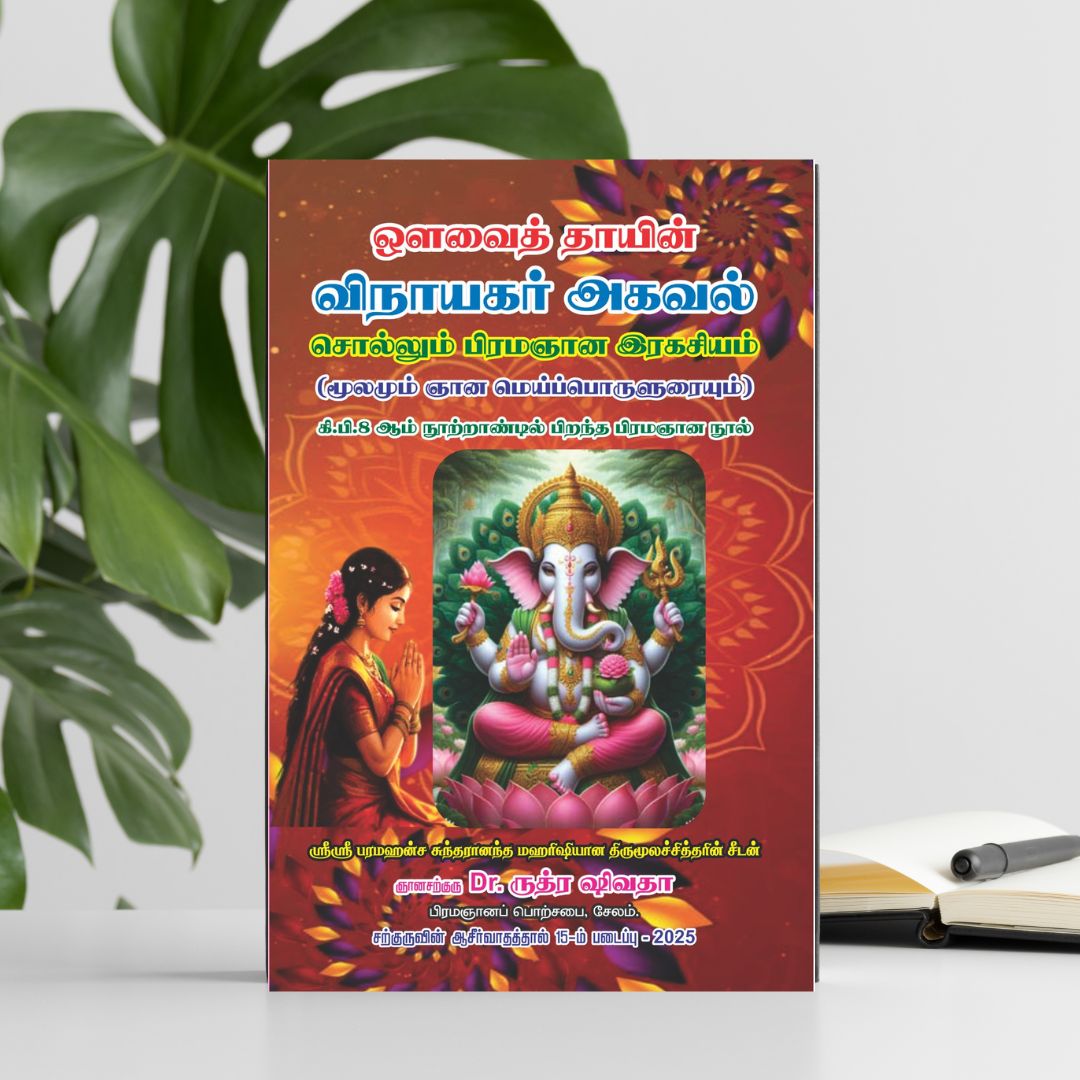
It is well known to us that Avvaiyar sang both the Vinayagar Agaval and the Gnana Kural. Yet, among these, about 95 out of 100 people do not know much about the Gnana Kural. When we published the authentic commentary (meypporuḷ urai) on the Gnana Kural in 2020, many scholars and Tamil pundits initially doubted whether Avvai had actually sung the Gnana Kural. But after receiving the book and reading it, they felt immense joy.
When we say that Avvai sang both of these spiritual works, a question naturally arises: which did she compose first, and which came later? This question began circulating among us a few days ago, and we have now found the answer. By comparing the manner in which the Vinayagar Agaval is composed, along with its theme, to the structure and core meaning of the Gnana Kural, we were left astonished at the depth of Avvai’s supreme wisdom. For the first time, we now share this insight with you.
It became clear to us that Avvai composed both these works for the very same purpose. From our research, it seems certain that she must have sung the Vinayagar Agaval first, and only afterward the Gnana Kural. Why? Because in the Vinayagar Agaval she invokes a divine figure, and in the Gnana Kural she then explains how that very figure is to be engaged with—through various experiential practices and methods—in order to attain true realization. When we realized this, the bliss we felt was beyond measure.
The wisdom Avvai wished to impart through these two works is this: First, all souls must come to know the true instrument (meykkaruvī) through which Brahma Gnana (supreme knowledge of the Absolute) can be attained. Then, by receiving Gnana Dikṣa (initiation into knowledge) from a true Guru, one must use that instrument to pursue the highest path of imperishable learning (sagak kalvi).
This true instrument is nothing other than our Sacred Feet (tiruvaḍi). And it is through the disciplines of Brahma-Gnana performed with the aid of those Sacred Feet that we can unite with God as beings of light. This, we came to understand without any doubt. Therefore, Avvai emphasizes—starting with the Vinayagar Agaval—that if we are to attain Śiva-Gnana, Brahma-Gnana, the Sacred Feet and the spiritual disciplines centered upon them are of utmost importance and necessity.
Is it not the Tamil tradition that whatever we do, we first begin with worship of Lord Vinayaka? In that very way, Avvai too prays poetically to Lord Vinayaka, asking Him to graciously bestow upon us the nectar, the Brahma-Gnana, so that we may attain the highest realization.
May we always have the love of the Guru and the love of God!
Thiruchitrambalam!!
Original verses and the True Spiritual Commentary
Sita Kalapa Senthamarai Boom (1)
The very first word of Vinayagar Agaval is sithak kalapam. The next word deserves close attention: senthāmarai pūmpādham.
The word sitham means “that which is filled with coolness.” Let us see what the Thirumandiram says about this:
“Shiva and Shakti, as heat and coolness,
Preserve this world.
Sacred Nandi, filled with merit,
Nourishes the world everywhere.
Shakti, with compassionate glance,
Mixes and sustains all,
Blossoming forth in the universe.
The eye’s nature is compassion;
The earth’s nature is endurance.
Shiva pervades all worlds,
Shakti is present, removing the heat,
Protecting and fostering like cooling grace.”
(Thirumandiram 387)
Shiva, embodiment of supreme knowledge, pervades all things and sustains the creation with a cooling grace, while Shakti nurtures with her compassionate glance.
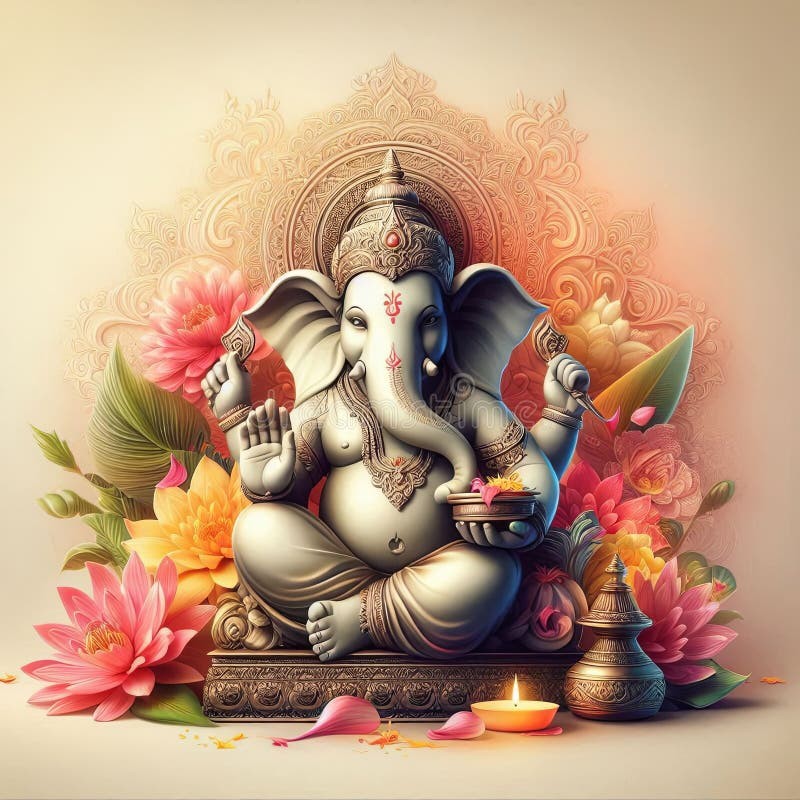
The word kalapam has two meanings: (1) the sandal paste smeared on the feet, and (2) a young elephant calf. When Avvaiyar begins her Vinayagar Agaval, how does she call upon Ganapati? She joyfully calls him: “O elephant calf, ever blissful, embodiment of nectar, come running to me!” Our wise Avvai, who lived as a knower of Brahma-Gnana, thus invites him with bliss. Is it not our Tamil tradition to call upon Vinayaka in song and dance, praising him as we invoke him? Likewise, Avvai calls out: “O elephant calf, who shines as nectar in my soul, come running, come!”
Why does she use the word amudham (nectar) here? Because nectar is always cool. Heat is of two kinds:
Sudu-veppam (burning heat) — like the scorching rays of the sun, which destroy the body.
Then-veppam (cool heat, gentle warmth) — which protects without destroying.
Anything kept cool never perishes. This is why we use refrigerators today to preserve food. Likewise, inside our body — in the brain — there is a cool, vital nectar-heat, while outside the body, over its surface, the burning heat operates. For the body to remain imperishable, this nectar-heat within the head must be circulated throughout the body. This is the only method — the true tantra — to preserve the body. Avvai intentionally filled the Vinayagar Agaval with such words of deep spiritual meaning so that all devotees may grasp and practice this secret.
Thus, the phrase sithak kalapam really means: “O beautiful elephant calf, embodiment of nectar, Lord Vinayaka, come swiftly to bless me.” That is Avvai’s invocation. We too must understand this inner meaning and call out with awareness.
Now let us look at the next phrase: senthamarai pumpadham (“lotus-like feet”).
Here Avvai says that Vinayaka’s feet are like the crimson lotus. The meaning is: his sacred feet shine in radiant red, like a lotus flower.
But here, the word padham should not be taken literally as “feet.” We commonly think padham simply means legs or feet. But does the foot really resemble a flower? Flowers have a natural quality: they bloom when they see the sun and close when the sun sets. Do our feet bloom and close like that? Clearly not.
Therefore, padham here must mean tiruvadi — the “sacred feet.” And in the language of true knowledge, tiruvadi does not refer to the physical feet but to the two eyes. The eyes open and close like the petals of a flower. Just as a lotus blossoms in water, Avvai compares the sacred feet (the eyes) to the lotus blossoming in a pond.
Thus, whenever this commentary says tiruvadi, you must remember: it refers to your two eyes, the divine instruments of vision.
This secret is revealed so that seekers and disciples may not misunderstand the term tiruvadi. Many spiritual texts, due to the ignorance of commentators, have taken tiruvadi merely as the physical feet. But in truth, tiruvadi symbolizes the two eyes, the true instruments of inner realization.
The whole of Vinayagar Agaval is nothing but wisdom, wisdom, and Brahma-Gnana. According to the mentality of people of those times, poets would often clothe profound truths in symbolic imagery, using devotional metaphors to express higher knowledge. That is how our ancestors composed spiritual works — presenting Brahma-Gnana under the form of bhakti. Thus, bhakti is nothing but an inner instrument to express the knowledge already within us.
So let us understand from now on: whenever we see tiruvadi in this commentary, we must think of the two eyes, the blossoming lotuses of realization.